By Devon Lee, Founder of Boundless Tiny Homes
Shorewood Hills is considering whether to allow accessory dwelling units.
That's a worthwhile conversation. ADUs can create housing for aging parents, adult children, caregivers, and extended family while adding housing gradually within existing neighborhoods. The Village's Comprehensive Plan already calls for considering them. ADUs aren't allowed under today's zoning code, and the Plan Commission put them back on its agenda in October 2026 after a state ADU bill died earlier this year.
But municipalities need to be clear about what they actually want.
If you want ADUs, write regulations that make them realistically buildable. If you don't, say so plainly.
What doesn't make sense is allowing ADUs on paper while adopting standards that prevent most homeowners from ever building one.
Setbacks Matter
One of the biggest issues in Shorewood Hills' discussion materials is setbacks.
The Village's planning consultant floated side setbacks of at least 12 feet and rear setbacks of at least 10 feet — or matching the Village's existing accessory-structure setbacks. That difference is huge.
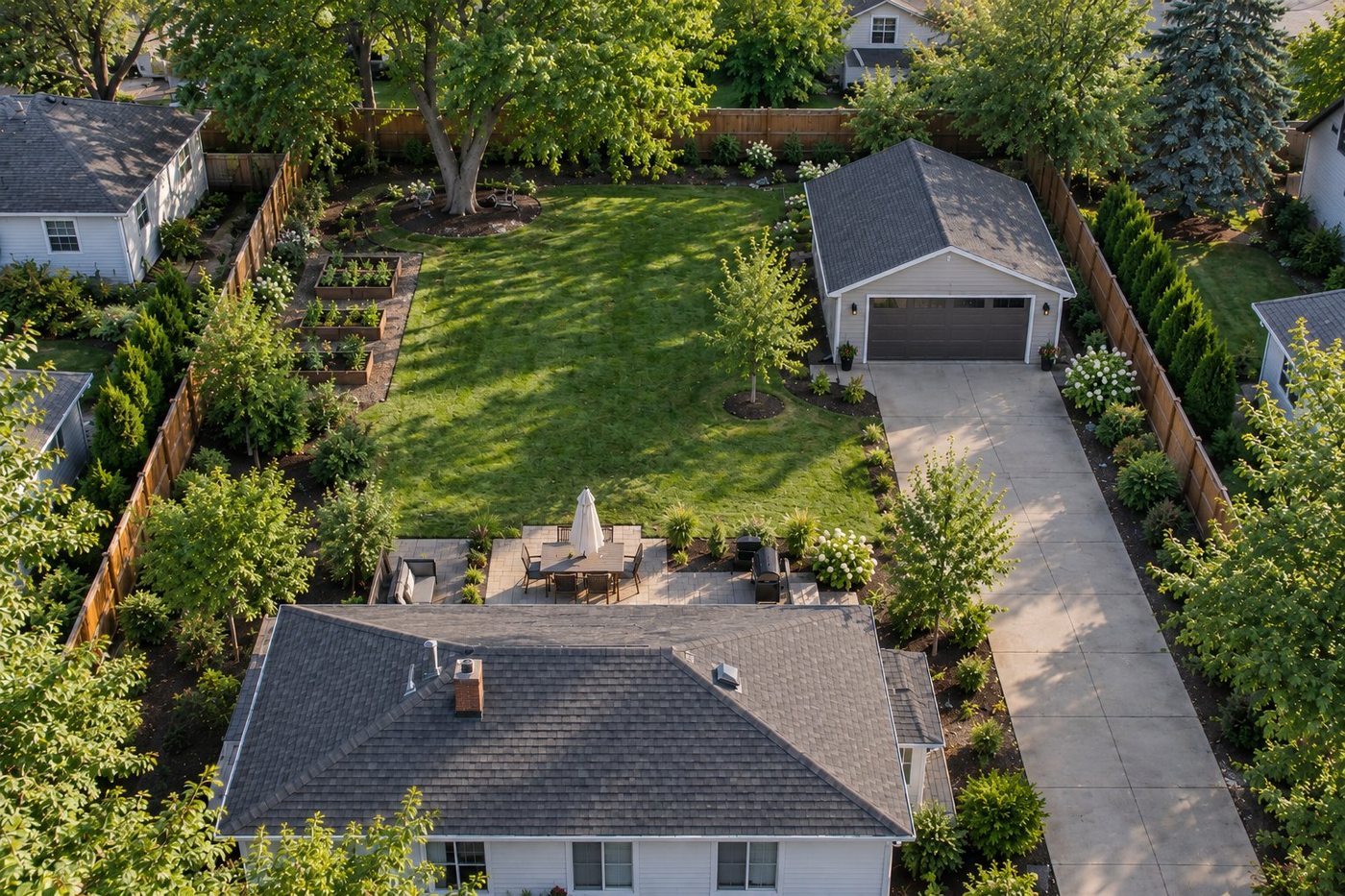
On an established residential lot, oversized setbacks can quickly eliminate most of the usable backyard once you account for the existing home, garage, utilities, easements, trees, drainage, and access. Shorewood Hills also caps lot coverage and floor area (accessory buildings included). On many lots, those rules — not whether an ADU is allowed — will decide what's buildable.
At Boundless Tiny Homes, we deal with these real-world site constraints every day.
Our position is simple:
Detached ADUs should generally be allowed with setbacks similar to other detached accessory structures.
If a detached garage can safely sit closer to a property line, it's difficult to justify dramatically larger setbacks simply because the structure contains living space.
Building codes already address fire separation, structural safety, windows, utilities, and life safety. Zoning should address legitimate neighborhood concerns without making projects impractical.
Don't Allow ADUs Only on Paper
A municipality can technically say it allows ADUs while writing the ordinance so restrictively that almost no one can actually build one.
That isn't meaningful housing reform.
It's allowing ADUs in theory while preventing them in practice.
Shorewood Hills — and any municipality considering ADUs — should avoid that middle ground.
If the goal is to allow them, then use reasonable setbacks, objective standards, and a predictable approval process. The Village Engineer's rough 2025 estimate found that about half of Shorewood Hills' residential lots could fit an ADU under the zoning rules then in place. The standards the Village chooses next will decide whether that number goes up or collapses.
If the goal is to keep them out, have that conversation directly.
Allow them in reality, not just on paper.
That's the standard municipalities should be aiming for.
— Devon Lee
Founder, Boundless Tiny Homes