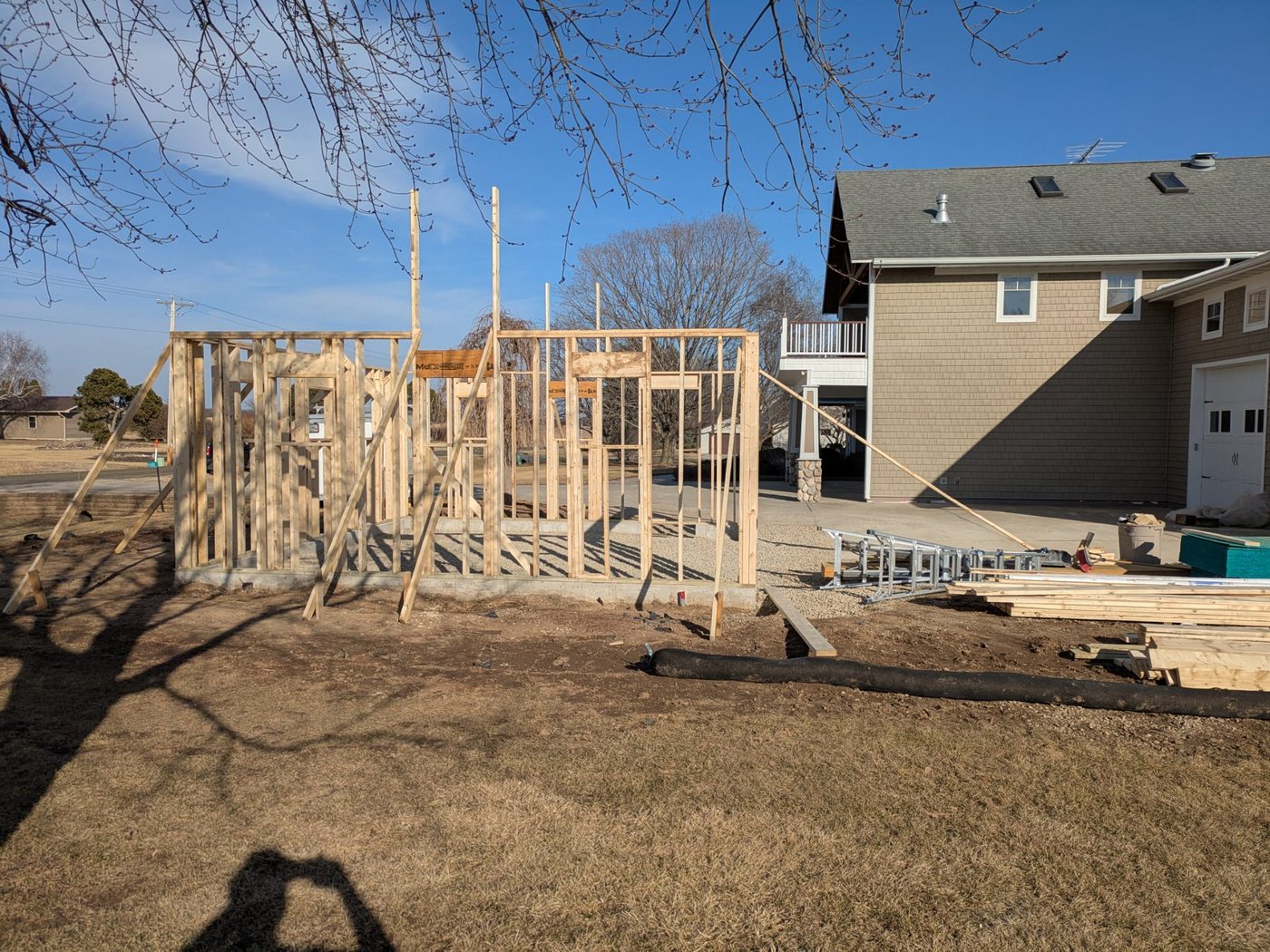
Infill
Development
The parcels conventional builders drive past — undersized, oddly shaped, tight to access, or encumbered. Small format housing is frequently the only product that makes them work.
Every city has
leftover land.
Madison and its surrounding municipalities are full of parcels that sit undeveloped for reasons that have nothing to do with demand — a lot that's forty feet wide, a corner with two front setbacks, a deep lot with a house at the street and an acre behind it, a tax-delinquent scrap the city has been carrying for a decade.
Conventional builders skip these because their product doesn't fit. A 2,000 square foot house on a 40-foot lot is a hard problem. Two 600 square foot homes on the same lot is not. The constraint that kills a conventional project is often neutral for small format.
- Undersized lots — narrow or shallow parcels below the standard buildable envelope
- Corner lots — two front setbacks that eviscerate the buildable area for a large home
- Deep lots — an existing house at the street with substantial unused depth behind it
- Irregular parcels — flag lots, angled boundaries, and remnants from old road realignments
- Encumbered land — easements, slope, or drainage that constrain where a large footprint can go
- Municipal surplus & tax-delinquent — parcels the city already owns and wants back on the roll
Infill is where public
dollars go furthest.
Infill is technically harder than greenfield — tighter sites, older utilities, more unknowns underground. What it offers a municipality is leverage: because the trunk infrastructure is already in the ground, the city's remaining contribution is small relative to the number of homes it unlocks. The same dollar that would extend a main to the edge of town can close the cost gap on an entire infill cluster.
Water, sewer, street, and storm are in the ground. What's left is the connection work — laterals, service upgrades, drives, on-site stormwater. That's a small, well-defined cost, which is exactly what makes it a practical thing for a city to help carry.
Infill adds housing without converting agricultural land or triggering a boundary fight with a neighboring town. That removes the two most contentious arguments before they start.
A vacant or tax-delinquent parcel producing nothing becomes several assessed dwellings. That new increment is what makes infrastructure participation defensible — and on a TIF-eligible parcel it's often the mechanism that funds the contribution outright.
Small detached homes read as houses. A cluster of them next to existing single-family stock doesn't produce the massing objection that a three-story building does.
Infill parcels are already inside the walkable, transit-served part of town. The units land where people want to live rather than at the edge of the last subdivision.
No plat, no new public infrastructure, and often a by-right approval path. Infill projects reach occupancy faster than anything requiring a subdivision.
Infill is harder
than it looks.
The reasons these parcels are still vacant are real. Here's what we check before telling you a site is worth pursuing.
On deep and flag lots, getting a fire truck to the rear units is the requirement that most often kills a plan. We check it in week one, not month four.
The main in the street may be undersized, on the far side, or at a depth that makes a lateral expensive. Older neighborhoods sometimes have shared laterals that complicate a new service.
Fill from a demolished structure, buried tanks, contamination on formerly commercial parcels, and undocumented foundations all show up on infill sites. Soil testing early is cheap insurance.
Tight sites mean no laydown area, restricted crane and delivery access, and neighbors on three sides. It's a real cost premium, and we price it rather than discovering it.
A vacant lot that's functioned as informal open space for twenty years has constituents. Early, direct neighbor contact is far cheaper than a contested hearing.
Utility easements, shared driveways, prescriptive access, and unresolved liens on tax-delinquent parcels can all constrain or delay. We look at title before design.
If you're a municipality or land bank holding scattered vacant or tax-delinquent parcels, we'll evaluate them as a portfolio — twenty at once is far more efficient than one at a time. We'll also model what your participation is worth. For each parcel we can show what the finished home costs with the project carrying all site infrastructure, and what it costs with the city carrying some of it. That second number is the one that determines who can afford to live there, and it's a decision only you can make. Start a conversation →
Send us the one nobody else wanted
Awkward lots are the ones we're most interested in. Give us the address and we'll tell you what it can hold and what it'll take.
Start a Site Feasibility Review →